Route 6/10 Interchange Reconstruction Project
Construction Management & Inspection
Owner
Location
Duration
Cost Data
Project Profile
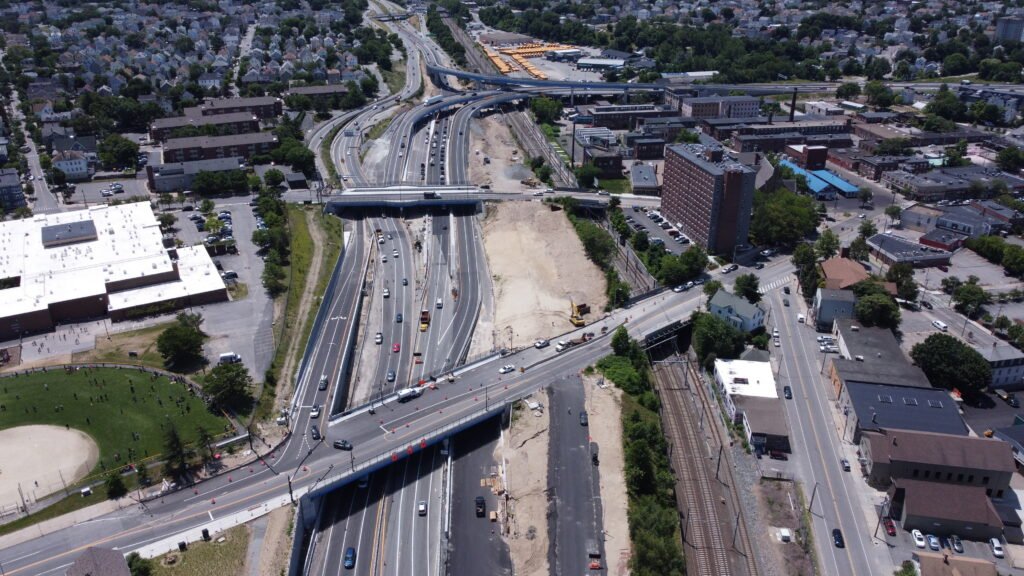
The Route 6/10 Interchange Reconstruction Design-Build Project is the largest Design-Build Project in Rhode Island Department of Transportation (RIDOT) history. This project reconstructed the entire interchange within the existing highway ROW, while replacing or removing the seven structurally deficient bridges within the project study area. The project reduced traffic in the surrounding neighborhoods as well as improved connectivity.
The 6/10 Interchange is a critical east-west regional link for automobile and truck traffic between Interstates 295, 95, and 195 in Providence, Rhode Island. Originally constructed in the 1950s as a bypass around Olneyville, it has fallen into a state of disrepair with seven of its nine bridge structures rated structurally deficient and many elements of the interchange failing to meet emerging highway safety and serviceability standards. As years have passed, the structural elements of the interchange have fallen into further disrepair, requiring extensive shoring, bracing, and other interim support measures on infrastructure in critical condition to meet safety and load requirements for the facility to remain in service.
The project highlights included the removal of the Huntington Viaduct, lowering of Route 10 Southbound to the level of the existing Route 10 Northbound, construction of a flyover ramp to provide a direct connection from Route 10 Northbound to Route 6 Westbound to correct a missing move, replacement of the Tobey Street on-ramp with a new two-way connection between Tobey Street and Harris Avenue, and construction of a new bridge crossing over the highway for Westminster Street, Broadway, and Harris Avenue/Tobey Street.
Garg performed inspection services for various aspects of the project, including:
- Demolition of bridge decks, pier caps, pier columns, steel girders, foundations, abutments, and demolition over and on Amtrak property/lines.
- Concrete placement of bridge foundations, pier columns, pier caps, abutments, and bridge decks.
- Rebar installation for bridge foundations, pier columns, pier caps, backwalls, wingwalls, abutments, and bridge decks.
- Utilities including communication and electrical lines that run underground and across bridges, drainage systems, and manholes.
- Traffic control for permanent traffic/lane shifts, temporary traffic control, detours, and road closures.
- Environmental (dewatering operations, soil/erosion control, removal and disposal of contaminated soils, and noise monitoring).