Trolley Modernization – Route 36 Improvement Project
Rail & Transit Engineering
Owner
Location
Duration
Cost Data
Project Profile
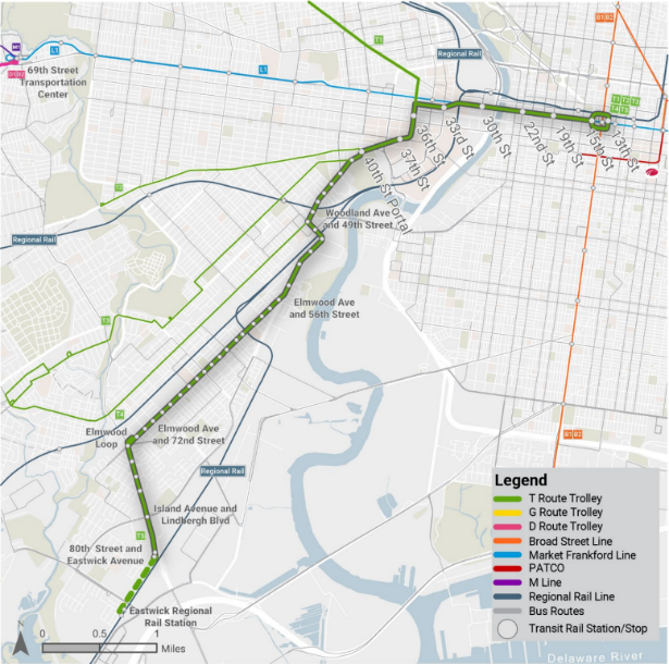
The Southeastern Pennsylvania Transportation Authority (SEPTA) Route 36 Improvement Project is an initiative aimed at significantly transforming the Route 36 (T5) trolley to make it more accessible, faster, and easier to use. This project readies the line’s infrastructure for the introduction of ADA-compliant, low-floor vehicles, which will greatly improve accessibility for riders of all abilities. The entire line’s wayside infrastructure will be renewed, including construction of seventeen new on-street trolley stations where no facilities currently exist, to be equipped with passenger amenities such as shelters, seating, improved lighting, and wayfinding signage. Real-time information and visual and audible service announcements at these new stations will further aid passengers with visual and hearing impairments. The design also includes updated end-of-line facilities at Eastwick Loop, intersection realignments, track design, transit signal priority coordination, and coordination with parallel bridge rehabilitations and catenary redesign to transition the system from trolley poles to pantographs.
The project is part of SEPTA’s broader $2.3 billion Trolley Modernization Program, which aims to deliver a more integrated and efficient trolley system.
Garg Consulting Services, Inc. (Garg) is providing communications and electrical engineering, track engineering, and HVAC engineering services. Tasks include, but are not limited to:
- Delivery of design, plans, specifications, and associated documents such as staging requirements and equipment schedules for Telecommunications, Security & Public Information Display Systems (PIDS) at 30%, 60%, 90%, and 100% submissions.
- Design of security systems such as Video Surveillance System (VSS) and access control.
- Design of associated network interfaces (data, CATV, and WAP connections).
- Integration of station communications system designs, including integration with SEPTA’s backend Real-Time Information / Audio Visual Public Address (AVPA) System
- Mechanical equipment design, including any ERU, RTU, heater, and outdoor units as required, to be confirmed as the design evolves.
- Support of track designs to improve curves to a higher radius for new equipment and reconfigure intersections.